How Gut Health Affects Your Mood: A Practical Guide
35% off on product page · save $6.46
How Gut Health Affects Your Mood: A Practical Guide
Understanding the Gut-Brain Connection
Your gut and brain communicate through several pathways, including nerves, hormones, and immune signals. The nervous system within your digestive tract helps manage digestion and communicates with your central nervous system. As Johns Hopkins Medicine explains, this communication can help explain why emotional stress and digestive symptoms sometimes occur together.
Another part of the conversation is the microbiome: the community of microorganisms, including bacteria, living in your digestive tract. These organisms interact with your body and play roles in processes such as breaking down certain food components. Researchers are studying how the microbiome may also be associated with brain function and emotional wellbeing.
Association is not the same as a proven cause or treatment. Mood is influenced by many factors, including life circumstances, physical health, sleep, medications, and mental health conditions. A change in digestion doesn’t automatically explain a change in mood, and improving your diet is not a guaranteed treatment for emotional difficulties.
Check the product’s listed specifications when evaluating understanding the gut-brain connection.
Everyday Habits to Consider
Start with variety rather than a restrictive plan. Vegetables, fruit, whole grains, and legumes can provide fiber and other nutrients. If you normally eat little fiber, add it gradually and drink enough water; increasing it too quickly can cause gas or discomfort.
Try berries at breakfast, a vegetable at lunch, or a small serving of beans with dinner. Choose foods you tolerate. If one consistently causes symptoms, discuss it with a healthcare professional or registered dietitian rather than eliminating multiple food groups on your own.
Movement, a regular sleep schedule, and stress-management practices can support overall wellbeing. They are useful habits, not cures.
Featured in this guide
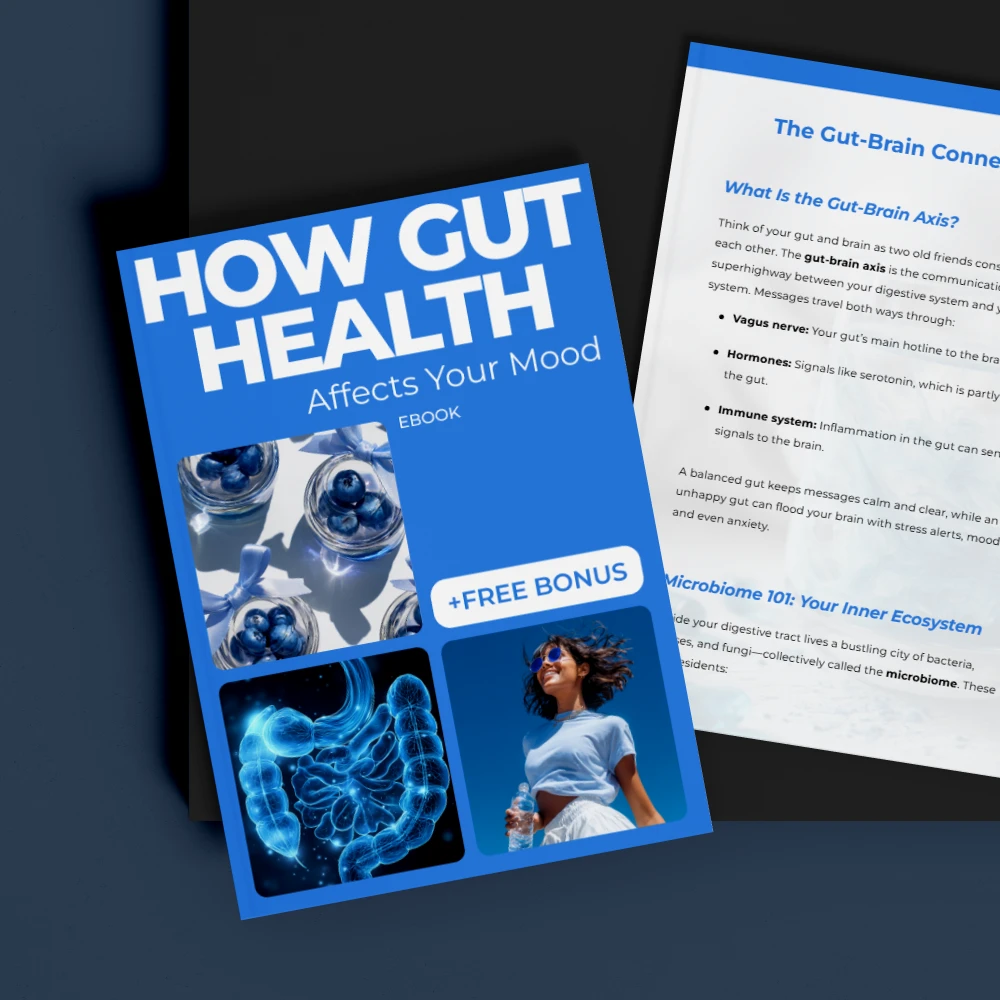
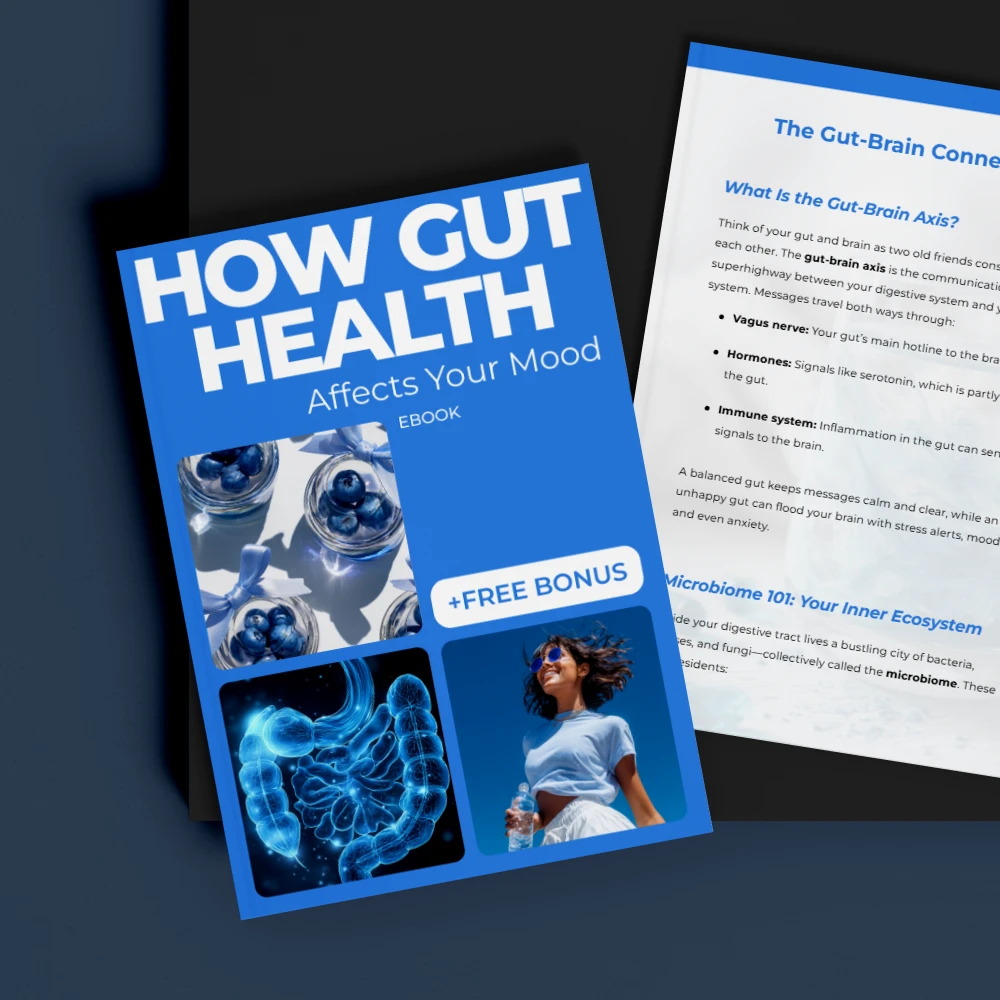
How Gut Health Affects Your Mood – A Practical eBook Exploring the Gut Health and Mood Connection, Gut-Brain Axis, Microbiome & Emotional Wellbeing
Explore the Topic With Our Gut Health and Mood eBook
Our How Gut Health Affects Your Mood eBook is practical educational reading about the microbiome, the gut-brain axis, and emotional wellbeing. It’s for anyone who wants an introduction to the connection, whether you’re exploring your own habits or simply interested in how the body works.
Visit the product page for current price and product details. Choose it as a starting point for learning, not as a promise of a particular health outcome.
If you’re also curious about technology and health information, our Your Guide to Symptom Diagnosis with Artificial Intelligence explores a different topic: using AI in relation to health symptoms. AI-generated information can be inaccurate and should not replace a professional diagnosis or delay care.
Check the product’s listed specifications when evaluating explore the topic with our gut health and mood ebook.
When to Seek Professional Support
Talk with a healthcare professional if digestive symptoms persist or if mood changes interfere with work, relationships, sleep, or everyday activities. You don’t have to establish a gut-brain connection before asking for help.
Seek prompt medical advice for severe symptoms, blood in your stool, or unexplained weight loss. Our eBooks are educational resources; they do not replace individualized medical or mental health care.
Check the product’s listed specifications when evaluating when to seek professional support.
Before choosing, compare the product details with your daily routine, available space, care needs, and preferred setup. The strongest option is usually the one that fits the intended use clearly and remains simple to clean, store, and check before repeat use.
It is also worth checking measurements, material notes, included parts, and compatibility details so the item matches the way it will be used after delivery.
FAQ
What are the 7 signs of an unhealthy gut?
There is no universally accepted list of seven signs, but persistent bloating, abdominal pain, constipation, diarrhea, nausea, heartburn, and changes in bowel habits can be reasons to discuss your digestive health with a clinician. These symptoms have many possible causes and don’t establish a diagnosis on their own.
What is a 7 day gut reset?
A seven-day gut reset generally refers to a short-term eating or lifestyle routine, not a medically established way to reset your digestive system. Sustainable habits are a better focus than restrictive plans or quick-fix claims.
What kills gut bacteria?
Antibiotics can affect both harmful and beneficial bacteria in your gut. Take them as prescribed, and discuss concerns with your clinician rather than stopping prescribed medication.
See if How Gut Health Affects Your Mood – A Practical eBook Exploring the Gut Health and Mood Connection, Gut-Brain Axis, Microbiome & Emotional Wellbeing fits your setup




Leave a comment