7 Essentials of Fire Fighting for Home Safety
25% off on product page · save $1.33
7 Essentials of Fire Fighting for Home Safety

What Are the Seven Essentials?
The phrase “seven essentials of fire fighting” is not a single universal checklist, but we can group the core practices into seven useful areas: recognizing fire risks, preventing fires, detecting fires, escaping safely, calling for help, using extinguishers appropriately, and supporting emergency responders . For you and your family, these essentials are primarily about preventing a fire and getting out safely—not taking on the work of trained firefighters.
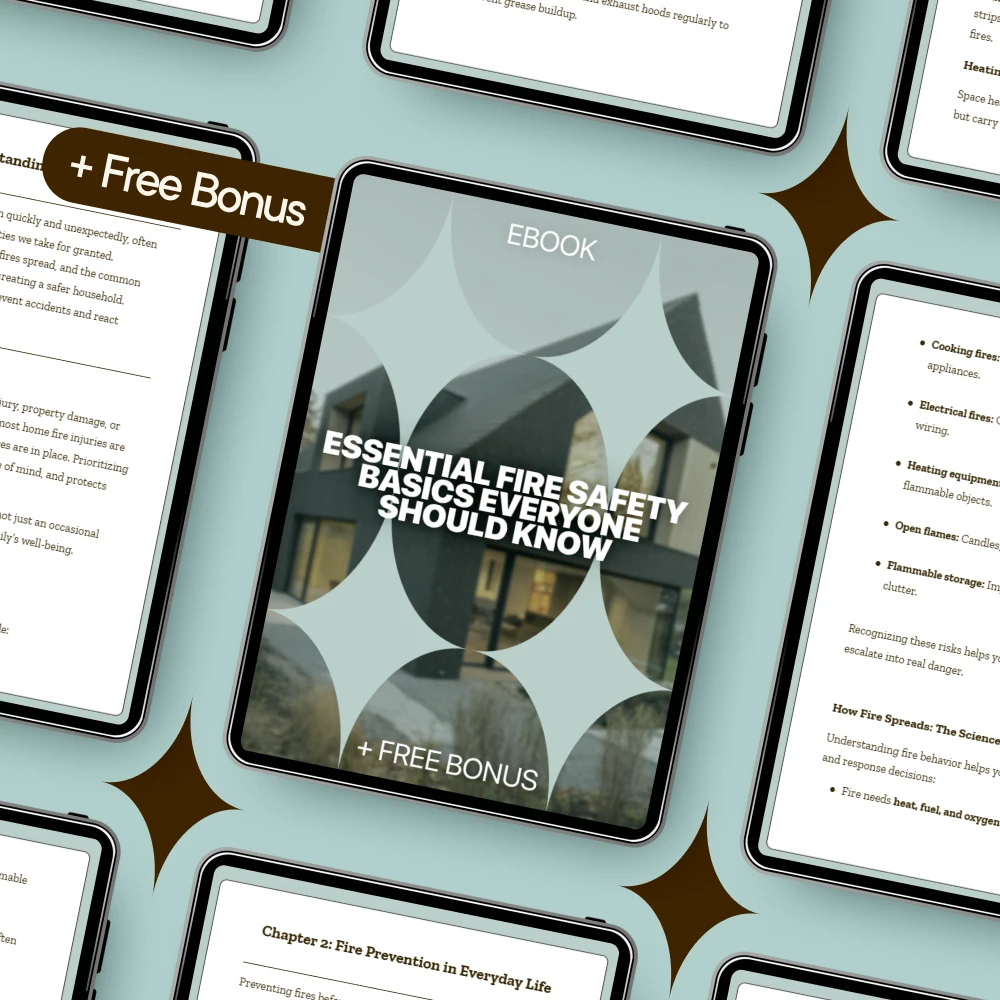
Our home fire safety basics guide offers a starting point for making these practices part of your household routine, and our Essential Fire Safety Basics Everyone Should Know eBook focuses on home fire prevention and family emergency planning.
1–3: Recognize, Prevent, and Detect Fires
Recognize risks by looking for common hazards such as unattended cooking, overloaded outlets, and items stored too close to heaters; then prevent fires by staying in the kitchen while frying, keeping combustible materials away from heat, and replacing damaged electrical cords. Prevention also means keeping matches and lighters away from children and avoiding the use of extension cords as permanent wiring.
Detect fires early with working smoke alarms installed according to their instructions and local requirements, including inside and outside sleeping areas and on every level of the home. Test alarms regularly, replace batteries as needed, and follow the manufacturer’s replacement schedule so your household can respond promptly.
Featured in this guide
Essential Fire Safety Basics Everyone Should Know | Fire Safety at Home Basics eBook | Home Fire Prevention Guide & Family Emergency Checklist
4–5: Escape Safely and Call for Help
Plan your escape by identifying two ways out of each room where possible, choosing an outdoor meeting place, and practicing with everyone in your household. If smoke is present, stay low as you leave, close doors behind you when possible, and never go back inside for belongings or pets.
Call for help from outside after you reach safety, using 911 or your local emergency number, and tell the dispatcher the address and whether anyone may still be inside. Make sure children know how to get out and where to meet you, and include a plan for anyone who may need assistance evacuating.
6–7: Use Extinguishers Carefully and Support Responders
Use an extinguisher only when appropriate : the fire must be small and contained, you must have the correct extinguisher and know how to use it, and you must have a clear exit behind you. If the fire grows, smoke makes breathing difficult, or you are unsure, leave immediately rather than attempting to fight it.
Support emergency responders by meeting them outside, sharing useful information, and following their directions. Tell them about anyone who may be trapped and any known hazards, but leave entry and firefighting operations to trained personnel.
FAQ
What are the essentials for firefighting?
For households, the essentials include fire prevention, working smoke alarms, a practiced escape plan, and a prompt emergency call from outside. An appropriate extinguisher can help with a small, contained fire when you are trained to use it and have a clear escape route, but evacuation comes first.
See if Essential Fire Safety Basics Everyone Should Know | Fire Safety at Home Basics eBook | Home Fire Prevention Guide & Family Emergency Checklist fits your setup




Leave a comment