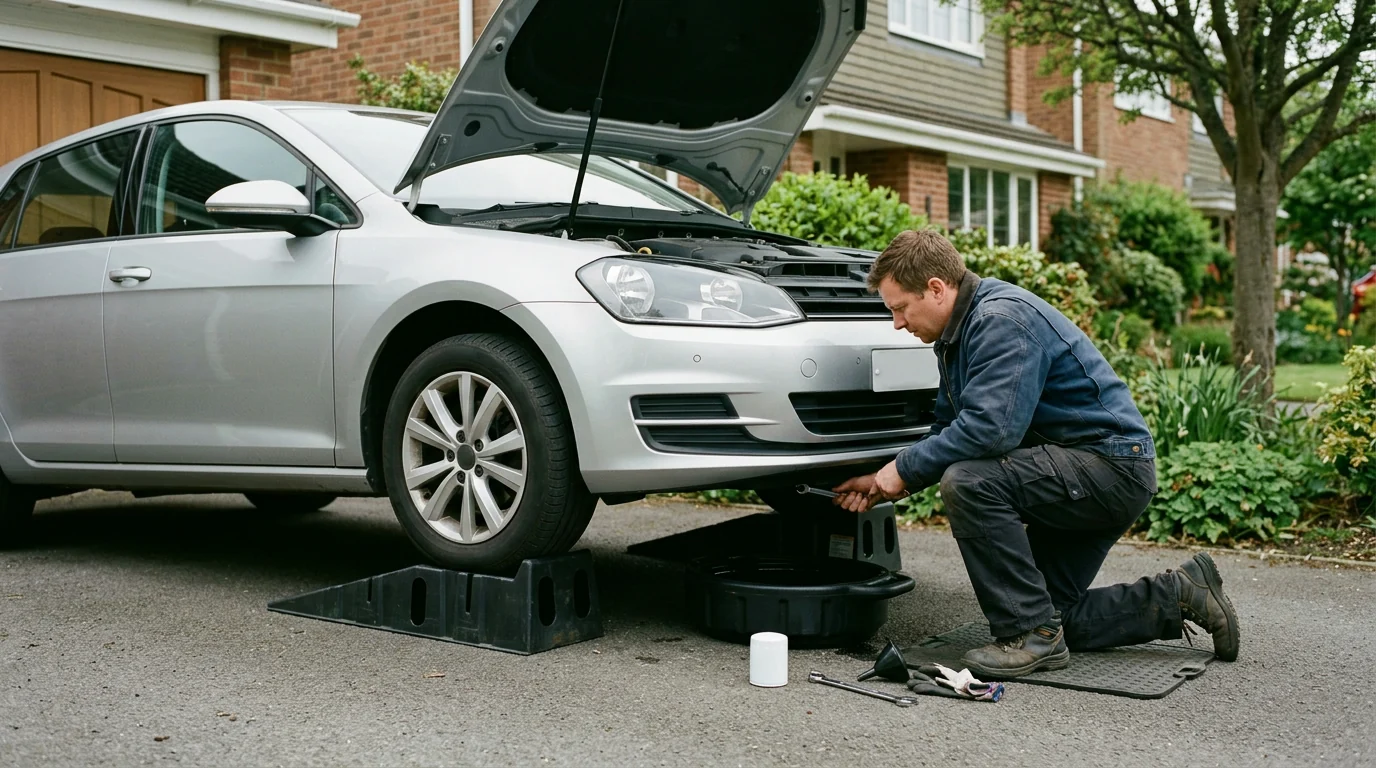
How to Change Your Car’s Oil and Filter Safely
Before you begin, consult your owner’s manual for the required oil viscosity, oil specification, filter type, oil capacity, and any vehicle-specific instructions. Gather the correct oil and filter, a drain pan, a funnel, gloves, rags, and the tools needed to remove the drain plug and filter.
Our Your DIY Guide to Changing Car Oil and Filters: A Step-by-Step eBook for Car Maintenance Enthusiasts is a companion if you want a dedicated guide to this maintenance task. You should still follow your vehicle’s manual whenever its instructions differ from general steps.
Featured in this guide
Your DIY Guide to Changing Car Oil and Filters: A Step-by-Step eBook for Car Maintenance Enthusiasts
Remove the oil fill cap, then carefully loosen the drain plug and let the old oil flow into the pan. Once draining is complete, reinstall the plug using the procedure and torque specified for your vehicle rather than overtightening it.
Remove the old filter and confirm its rubber gasket came off with it; a gasket left on the engine can prevent the new filter from sealing. Prepare and install the new filter according to its instructions, including any direction to oil the gasket or tighten it by hand.
Add the specified oil through a funnel, starting with the amount directed by your manual, then check the dipstick or your vehicle’s electronic oil-level procedure. Run the engine briefly, turn it off, inspect the plug and filter for leaks, and recheck the level after allowing the oil to settle.
Add oil only as needed to reach the proper level, and do not overfill. Our team recommends recording the date and mileage, resetting the oil-life reminder if applicable, and taking the used oil and filter to a collection facility that accepts them.
Use your owner’s manual to select the correct oil and filter, secure the vehicle, drain the old oil, replace the filter, and refill to the specified level. Finish by checking for leaks, recording the service, and recycling the used oil and filter.
Follow the interval in your owner’s manual or your vehicle’s maintenance system, since the right schedule varies by vehicle, oil, and driving conditions. Frequent short trips, towing, or other severe-use conditions may call for the shorter interval specified by the manufacturer.










Leave a comment