35% off on product page · save $41.46
Cord Safety for Pets: A Room-by-Room Guide
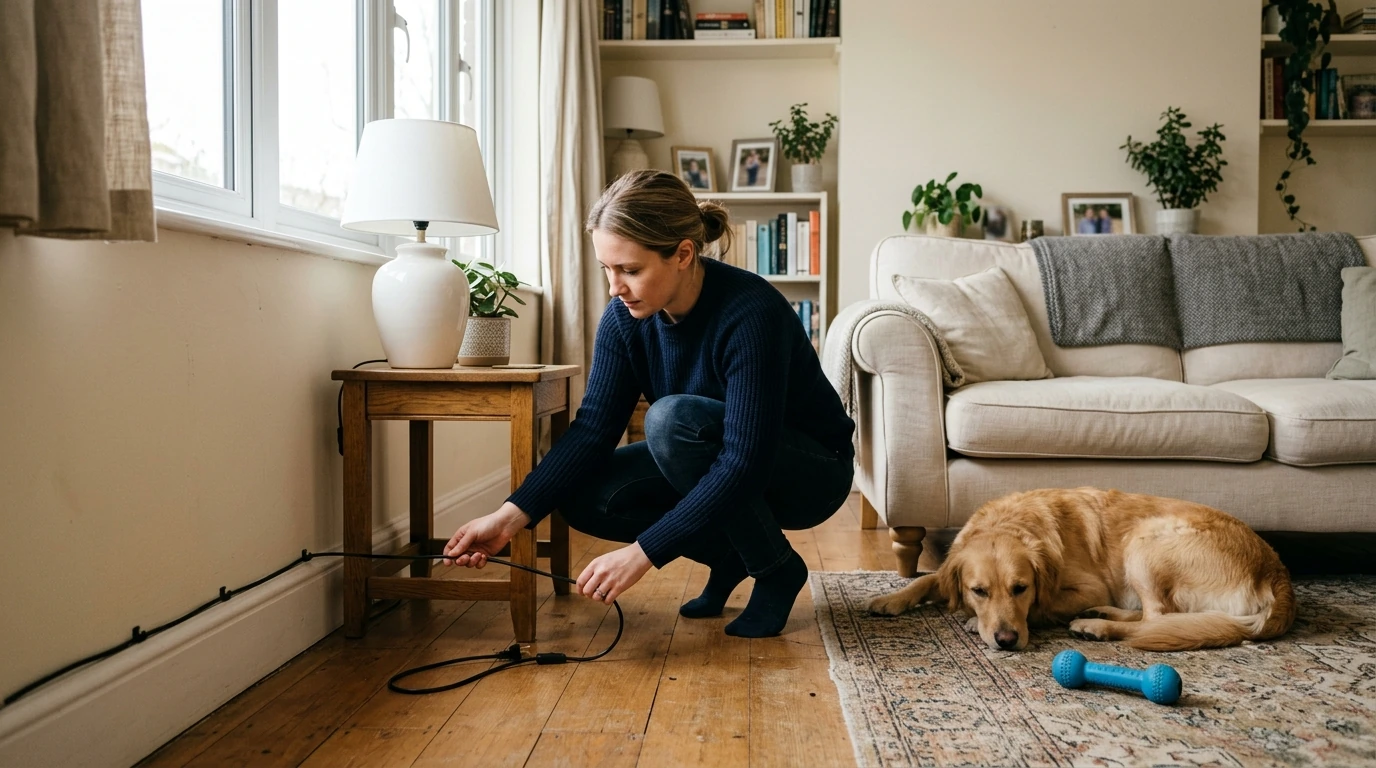
Walk through your home at your pet’s level. Look for floor-level outlets, dangling charger ends, cables behind furniture, and cords beside favorite beds or play areas. Pay attention to anything newly interesting: a kitten may discover a hanging cable, while a dog may start exploring the space behind a couch.
Unplug chargers when they aren’t in use and put them away. Move necessary cords out of reach or protect their route with a suitable cover; don’t rely on your pet to leave an exposed cable alone. Keep power strips inaccessible, too. The Electrical Safety Foundation International’s pet-safety guidance is a useful reminder that cord management is an electrical-safety measure, not just a way to prevent damaged belongings.
If your pet may have bitten a live cord, do not touch your pet or the cord while it may still be energized. Disconnect power only if you can do so safely, then contact a veterinarian promptly—even if your pet appears well. Take damaged cords out of service; replace them or have them assessed by a qualified professional rather than taping over damage.
Start with the spaces your pet uses most. Repeat the sweep after you move furniture, set up a device, or bring out temporary cords such as holiday lights or guest-room chargers.
| Area | What to check | Safer next step |
|---|---|---|
| Living room | TV cables, lamps, power strips | Route cables out of reach and keep power strips inaccessible. |
| Bedroom | Phone chargers, bedside lamps | Store unused chargers and lift accessible cables away from beds and floors. |
| Home office | Desk cables, cords beneath chairs | Secure cables without pinching them; block access beneath the desk if needed. |
| Kitchen and utility spaces | Small-appliance cords | Unplug and store appliances after use; keep cords back from counter edges. |
Test each change from your pet’s point of view. Can a paw pull a cable down? Is there still a gap behind the furniture to explore? A cord cover may protect an appropriate cable run, but it does not make a dangling charger or reachable power strip safe.
Featured in this guide
No More Chews: Cord Safety for Pets | Pet-Proof Your Home Guide for Dogs & Cats | Digital Download
Barriers come first. For dogs, choose size-appropriate chews, supervise new items, and calmly redirect interest in a cable toward an approved chew. For cats, secure cords that invite batting and offer supervised interactive play. Put string-like toys away afterward if they could become another hazard.
Do not spray or coat an electrical cord unless the product is intended for that use and its directions permit it. A taste deterrent is not a substitute for keeping an energized cable out of reach.
Our team’s short household routine is unplug, put away, and look again . Recheck barriers as puppies and kittens grow or whenever an adult pet’s behavior changes. If chewing is sudden, persistent, or includes nonfood objects, ask your veterinarian for guidance.
If you want a dedicated resource for organizing your sweep, our No More Chews digital download is a pet-proofing guide for dog and cat households. Use it alongside your own checks, not in place of veterinary advice or electrical repair.
Compare related options such as Where Silence Feels Like Luxury – A Travel Guide to the best destinations for a digital detox vacation | Peaceful Escapes, Offline Travel & Mental Reset to match features, dimensions, and use case before choosing.
Offer size-appropriate, pet-safe chews and supervised enrichment while keeping cords and other unsafe items out of reach. If chewing is sudden, persistent, or involves nonfood objects, consult your veterinarian.
We can’t verify current reviews or make a safety judgment about those treats here. Review the product’s ingredients and directions, and ask your veterinarian whether a treat is appropriate for your dog.
Puppy teething is temporary, but dogs may chew at any age. Keep cord barriers in place rather than assuming your dog will outgrow the risk.









Leave a comment