50% off on product page · save $12.99
How to Choose a Baby Monitor That Fits Your Family
A baby monitor should make it easier to check on your child, not give you another complicated device to manage. Before comparing models, picture an ordinary day in your home: Where does your baby sleep? How far away will you be? Do you mainly need to hear the nursery, or would a view help you decide when to go in?
Think about who needs access, too. A dedicated parent unit gives you a separate screen or speaker, which may appeal to a household that wants to keep monitoring off its phones. An app-connected monitor can make phone access convenient for caregivers, but it also brings account settings, updates, and network reliability into the decision. Set a budget around the features you’ll use every day before paying for extras.
Audio monitors are the simplest option: they let you hear when your baby may need you. Video monitors add a view of the sleep space, which can be useful when you want to look before entering the room. Wi-Fi video monitors typically offer app access, though their features may depend on your home network or an internet connection. Some models advertise movement or breathing-related features; those features are not a substitute for safe sleep practices or medical advice.
Baby monitor types at a glance
| Type | Best fit | Check before buying |
|---|---|---|
| Audio | Parents who primarily want to hear the nursery | Sound clarity, range, battery life |
| Video with parent unit | Parents who want a view without relying on a phone | Night image, screen battery, connection range |
| Wi-Fi video | Households that value app access | Privacy controls, updates, internet dependence |
There is no single best type for every household. If you’ll carry a parent unit between rooms, its battery and usable range may matter more than app features. If several caregivers need remote access, the way a Wi-Fi model manages accounts may matter more than its screen size.
Featured in this guide
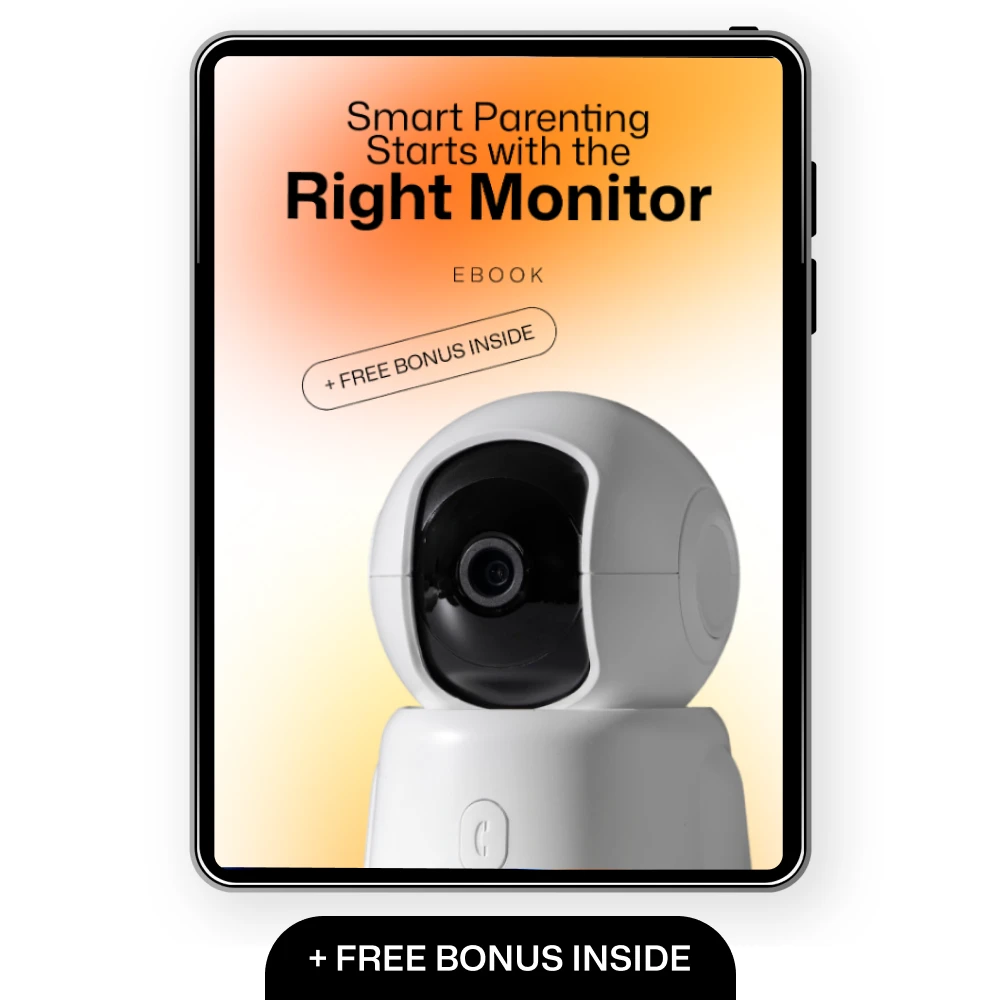
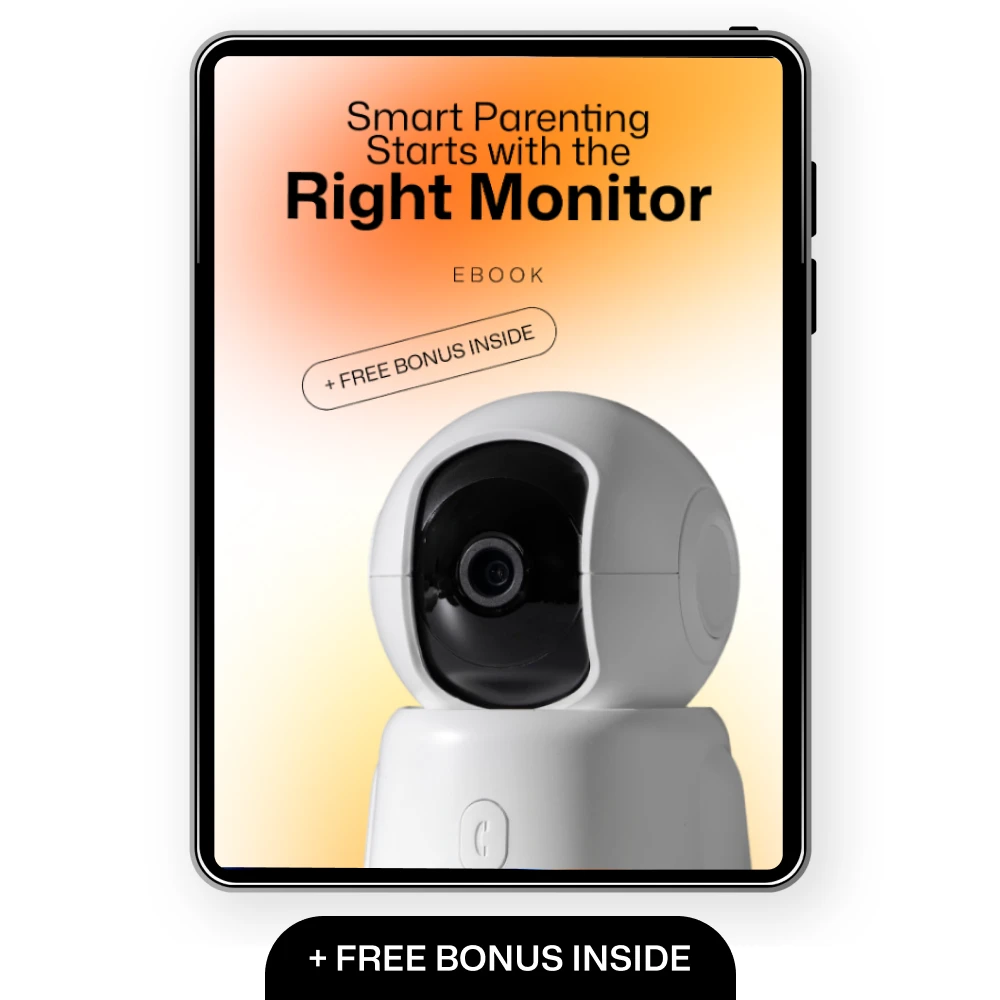
Smart Parenting Starts with the Right Monitor: How to Choose a Baby Monitor – The Ultimate Guide for Parents
If you choose an internet-connected monitor, use a unique password, review who has access, enable available security protections, and install updates. Decide whether you’re comfortable relying on your home network before making app access a must-have.
Keep the camera and every cord out of your baby’s reach. A monitor can help you observe your child, but it does not replace caregiver attention, safe sleep practices, or medical advice. Movement- or breathing-related features do not change that distinction.
For an internet-connected monitor, use a unique password, turn on available security protections, review who has access, and install software updates. The Federal Trade Commission’s camera security guidance offers practical steps for securing connected cameras. Your monitor’s privacy depends both on its available controls and on how you configure them.
Plan camera placement before you buy. Choose a position that gives you a useful view while keeping the device and every cord out of your baby’s reach. A monitor helps you check on your child; it does not make an unsafe sleep space safe or replace caregiver attention. For established precautions, consult the American Academy of Pediatrics’ safe sleep guidance.
Make a short list of must-haves—perhaps clear audio, a parent unit, a nighttime view, or phone access. Compare only models that meet those needs, then weigh setup, controls, charging, connectivity, and any ongoing requirements. Choose the monitor you can use consistently and comfortably, not necessarily the one with the longest feature list.
Compare related options such as Flip the Negative – Smart Checklist for Selling a Car with Negative Equity Options | Financial Reset Guide | Digital Download to match features, dimensions, and use case before choosing.
There is no universally accepted parenting rule by that name. If you encounter it, look at the specific advice being proposed rather than treating the label as a standard you must follow.
There is no reliable checklist of ten early signs that can establish a young child’s intelligence. Children develop in different ways, so bring questions about your child’s development to their pediatrician.
There is no sibling position that is reliably “the favorite” in every family. Relationships vary, and it is more useful to consider how each child is treated than to assume a pattern from birth order.
“Type C mom” is an informal label, not a clinical parenting category. Its meaning varies by the person using it, so it cannot tell you how someone parents without more context.










Leave a comment