35% off on product page · save $10.76
Can Your Skin Reveal Nutrient Deficiencies?

You notice rough skin, search for an explanation, and quickly find a page naming a vitamin. That may sound reassuringly specific, but appearance alone cannot establish a deficiency. Dryness, for example, can also follow a change in weather or skin care products. Irritation, common skin conditions, medications, and other health issues can produce changes that resemble supposed “nutrient signs.”
Instead of trying to name the missing nutrient, make a short record of what is happening. When did the change begin? Where is it, and is it spreading? Is it painful or itchy? Have you noticed mouth symptoms, fatigue, digestive concerns, or anything else new? Note any recent changes in products, medications, or eating patterns, too. A few concrete details give a healthcare professional more to work with than a diagnosis guessed from a photograph.
Check the product’s listed specifications when evaluating start with a pattern, not a single symptom.
Persistent dryness or roughness, cracks at the corners of your mouth, unusual bruising, slow-healing areas, and a new or changing rash are all reasonable things to discuss with a clinician. None points to one nutrient on its own. Skin conditions, irritation, medications, and other health issues may also be involved.
Note whether the area hurts or itches and whether you have mouth symptoms, fatigue, digestive concerns, or difficulty eating. A clinician can consider those details alongside your eating patterns and health history, then decide whether an examination or targeted tests make sense.
Featured in this guide
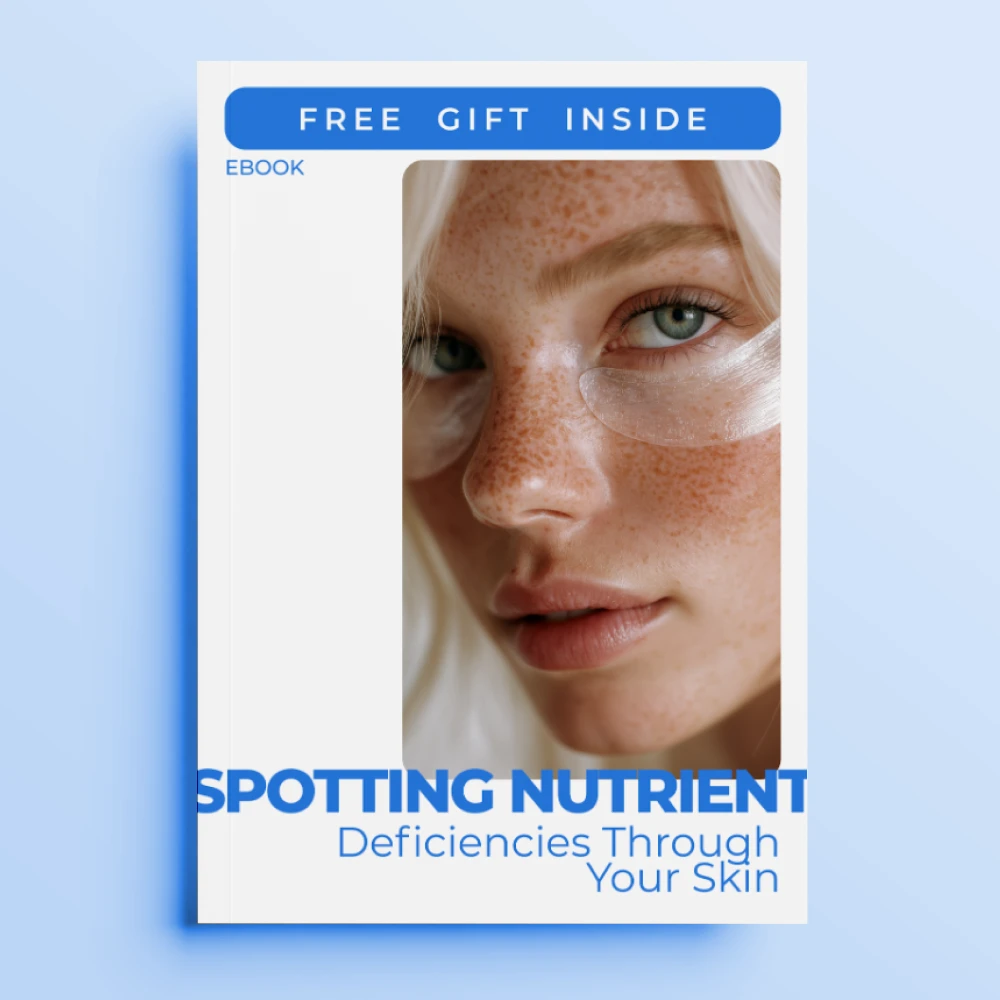
Spotting Nutrient Deficiencies Through Your Skin | Ebook Guide to Nutrient Deficiency Signs on Skin | Skin Health, Nutrition & AI Insights
If you want a focused starting point for learning about skin health and nutrition, our Spotting Nutrient Deficiencies Through Your Skin ebook can help you frame what you have noticed. You can use AI to generate questions, too: What other explanations should you ask about? Which changes should you record? Neither an ebook nor an AI answer can confirm a deficiency or determine a supplement dose.
For more on using AI to think through symptoms, you can explore our Your Guide to Symptom Diagnosis with Artificial Intelligence. Professional judgment remains important when your health is at stake.
Use what you learn to organize observations and prepare questions for an appointment. The ebook does not replace clinical advice, provide a personalized diagnosis, or establish that a particular skin change calls for a supplement.
AI can be useful in the same limited way: to help you ask better questions. You might ask what else could explain a change, which details would be helpful to record, or which symptoms call for medical attention. Do not use an AI-generated answer to identify a deficiency or choose a supplement dose. If you want to learn more about that boundary, our Your Guide to Symptom Diagnosis with Artificial Intelligence is another ebook you can explore; an AI suggestion still needs professional judgment when your health is at stake.
Seek prompt medical advice for significant unexplained bruising, a concerning wound, or symptoms that are rapidly worsening. A rash accompanied by serious symptoms—such as trouble breathing or feeling faint—calls for urgent care. These situations deserve attention on their own terms, not a guess about which nutrient might be involved.
For a persistent or concerning change, the practical sequence is simple: notice it, gather context, and talk with a qualified professional. Skin can start a useful conversation, but it cannot finish the diagnosis.
There is no reliable universal set of seven signs. Symptoms vary, and skin changes, mouth cracks, and bruising can have other causes; ask a clinician about persistent changes.
There are not five distinctive skin signs that identify vitamin D deficiency, which may have no obvious symptoms. Discuss your risk factors or concerns with a clinician, who can advise whether testing is appropriate.
Review your symptoms and eating patterns with a healthcare professional. They may recommend an examination or targeted tests; skin appearance alone cannot confirm a deficiency.










Leave a comment